Snake, Auger, Hydrojetter or Suction Truck: Matching the Tool to the Blockage
No single tool clears every clog. A drain snake that solves a hairball in a shower line will do nothing for a grease mat in a restaurant main, and a suction truck cannot cut through a root intrusion. The four tools below are specialists, not rivals. When you call a desentupidora em Belém São Paulo SP, the technician’s first job is to diagnose the blockage type, then pick the matching tool. This article explains what each one does, what it is best for, and where it fails.
Why Blockage Diagnosis Comes Before Tool Selection
Every clog has a signature: what it is made of, where it sits, and how wide the pipe is. A soft blockage in a narrow branch line behaves differently from a hard obstruction in a main sewer. Choosing the tool before confirming those three facts is the most common cause of wasted time and damaged pipes.
A proper diagnosis uses a camera inspection or at least a physical probe. The technician notes the pipe diameter, the material (PVC, cast iron, concrete), and the distance to the obstruction. Only then does the tool choice become obvious. Tool selection is a consequence of diagnosis, not a shortcut around it.
This matters even more in older neighborhoods, where pipe layouts were not standardized. In Belém, São Paulo, mixed residential and commercial buildings often share branch lines that were modified over decades. A single tool applied blindly can push a blockage deeper instead of removing it. That is why a reputable desentupidora Belém arrives with several tools on the truck rather than one.
The Four Tools and What Each One Solves
Drain Snake: The Precision Tool for Small Lines
A drain snake is a flexible steel cable with a cutting or grabbing head, fed manually or by a small motor into a branch line. It is the least invasive option and the right first choice for sinks, showers, toilets, and floor drains up to about 100 mm in diameter.
What it does: It breaks up or hooks soft and semi-solid blockages — hair, soap scum, paper, small food debris — and pulls them back or pushes them through. Because the cable follows bends, it reaches traps and short runs that rigid tools cannot enter.
Best for: Isolated clogs in a single fixture, slow drains with a known local cause, and situations where the pipe material is fragile or the access point is tight.
What it cannot do: It does not clean pipe walls. Grease and scale remain attached after the cable passes, so the clog often returns within weeks. It also cannot remove roots or hard scale, and forcing it through a collapsed pipe can cause damage.
Auger: The Middle Ground for Tougher Branch Lines
An auger is a powered version of the snake, with a larger, heavier cutting head and a motor that drives it with more torque. It is the tool that bridges the gap between a hand snake and a full hydrojetting rig.
What it does: It cuts through compacted debris, hardened grease, and small root tips in branch lines and short main runs. The rotating head grinds material rather than just pushing it.
Best for: Repeated clogs in the same line, kitchen and laundry drains with compacted grease, and toilets with hard obstructions that a hand snake cannot grip.
What it cannot do: Like the snake, it leaves residue on the pipe walls. It struggles with long horizontal runs and large-diameter mains, and it cannot remove a full root mass. An auger opens a hole; it does not restore the full pipe diameter.
Hydrojetter: The Wall-Cleaning Specialist
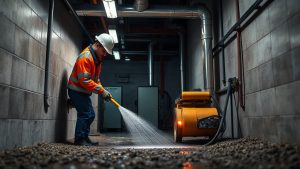
A hydrojetter uses high-pressure water, typically delivered through a rotating nozzle, to scour the inside of a pipe. It is the only tool in this group that cleans rather than merely penetrates.
What it does: The water jets cut grease, scale, silt, and soft roots from the pipe wall and flush the debris downstream. It restores the original internal diameter, which is why it is the standard for preventive maintenance in restaurants and condominiums.
Best for: Grease-heavy kitchen lines, long horizontal runs, main sewer lines, and any situation where the clog keeps returning. It is also the right choice before a camera inspection, because it gives the camera a clean surface to read.
What it cannot do: It cannot remove hard obstructions such as broken pipe fragments, construction debris, or a solid root mass without a cutting head. It also requires a suitable access point and a pipe in reasonable structural condition; high pressure on a cracked or collapsed pipe can make things worse.
Suction Truck: The Volume Remover
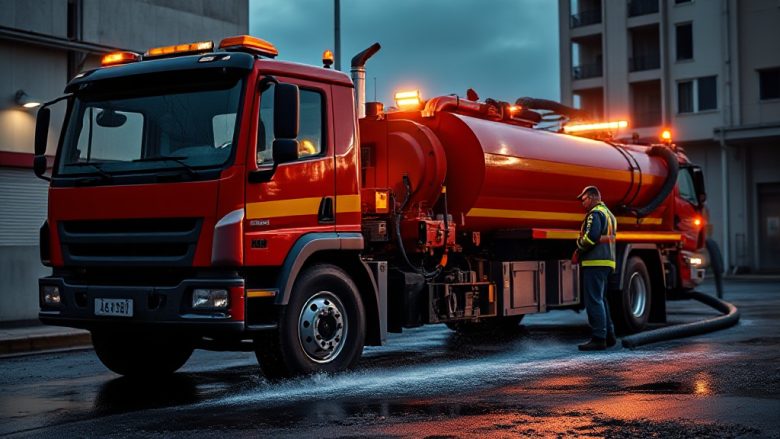
A suction truck, or vacuum truck, removes material by pulling it out under negative pressure. It is not a clearing tool in the same sense as the others — it is a removal tool.
What it does: It empties manholes, wet wells, septic tanks, and grease traps, and it removes loose sludge and standing waste that would otherwise be pushed further down the line.
Best for: Septic tank cleaning, grease trap emptying, manhole desilting, and clearing a line after a snake or auger has loosened the blockage but left the debris in place.
What it cannot do: It cannot cut through a blockage inside a pipe. It has no reach into branch lines and no ability to scour walls. A suction truck removes what is already loose; it does not loosen what is stuck.
Matching the Tool to the Blockage: A Practical Comparison
The table below summarizes the matching logic. Read it as a decision aid, not a rulebook — the technician’s on-site diagnosis always overrides it.
| Blockage type | First tool | Why | Follow-up |
|---|---|---|---|
| Hair and soap in a shower or sink | Drain snake | Soft, local, small diameter | None usually needed |
| Compacted grease in a kitchen line | Auger, then hydrojetter | Auger opens a path; jet cleans the wall | Hydrojetting to prevent return |
| Root intrusion in a main sewer | Hydrojetter with cutting nozzle | Only high-pressure cutting removes roots | Camera inspection to confirm |
| Full septic tank or grease trap | Suction truck | Volume removal, not cutting | Schedule recurring emptying |
| Unknown or recurring clog | Camera first, then match | Diagnosis prevents repeat visits | Preventive plan |
Two patterns stand out. First, soft and local blockages rarely need more than a snake. Second, recurring blockages almost always signal that the first tool only opened a hole. When a clog returns within a month, the correct response is not a bigger snake — it is a wall-cleaning method or a camera inspection.
For buildings with mixed occupancy, the matching logic has to account for shared lines. A restaurant grease clog and a residential paper clog can meet in the same main, and the tool that clears one may not clear the other. This is where a desentupidora Belém São Paulo SP with a full equipment set saves time: the technician can switch tools on site instead of scheduling a second visit.
Common Mistakes and When to Call a Professional
The most frequent mistake is treating every clog as a snake job. A hand snake is cheap and available, so it gets used first — and when it fails, the blockage has often been pushed deeper or compacted against a bend. The second most frequent mistake is using chemical drain cleaners on a fully blocked line. Chemicals need standing water to work and can damage older pipes; on a hard blockage they simply sit there.
Another common error is skipping the camera. A camera inspection is not an upsell; it is the step that tells you whether the pipe is blocked, root-damaged, or collapsed. Those three conditions require different responses, and only one of them is a desentupimento job in the usual sense.
Call a professional when the clog returns within weeks, when multiple fixtures are slow at once (a sign of a main line problem), when there is sewage backup, or when the pipe material is old and fragile. A professional team arrives with the four tools described here and the diagnostic equipment to choose between them. Preventive maintenance — periodic hydrojetting for grease lines and scheduled suction for tanks — is usually cheaper than emergency calls, and it keeps the matching decision simple because the pipe never reaches the failure point.
Frequently Asked Questions
Can a drain snake damage my pipes?
It can if the pipe is already cracked, collapsed, or made of fragile material, or if the cable is forced past a hard obstruction. A technician who inspects first and matches the cable size to the pipe diameter avoids most of this risk.
Why does my clog keep coming back after snaking?
Because a snake opens a path through the blockage but leaves grease and scale on the pipe wall. The residue narrows the line again, and debris catches on it. Hydrojetting cleans the wall and is the usual fix for recurring clogs.
Is hydrojetting safe for older pipes?
It depends on the pipe’s condition. High pressure is safe on sound pipes of adequate diameter but risky on cracked, root-damaged, or collapsed lines. A camera inspection before jetting is the standard safeguard.
When is a suction truck the right choice instead of a snake?
When the problem is volume, not obstruction: a full septic tank, a grease trap, or a manhole filled with sludge. A suction truck removes material; it does not cut through a blockage inside a pipe.